A slapdash affair from three directors, and a true classic…of a kind

Zombie 3 is one of those films. The kind of film that makes me want to debate and refute the very idea of “bad” film or, even more irksome to me, “so bad it’s good.” Because if a movie entertains you, it is by my definition good, even if it possesses certain, let’s call them rickety bits. And boy howdy does Zombie 3 have some rickety bits. In fact, it is a film composed almost entirely of rickety bits that are somehow assembled by a dying legend—and two less legendary but certainly infamous collaborators—into a ramshackle shack that never the less feels like home. Mere words fail to capture just how truly entertaining I find Zombie 3.
For those who don’t know the story, in 1979 Italian director Lucio Fulci was dispatched to cash in on the success of George Romero’s Dawn of the Dead. While he could have simply copied Romero’s masterpiece, as was often the way in Italian exploitation film. Instead, Fulci ran with the idea, infusing his tropical island-set film with a sweaty sense of claustrophobic decay and hopelessness. It’s a gory, bleak masterpiece of Italian horror that would cement him as, at the least, co-king of the zombie film alongside Romero. Fulci followed up with City of the Living Dead in 1980 and then what many consider (including me) consider to be his magnum opus, The Beyond, in 1981. Both City and The Beyond have a few nonsensical, awkward moments, but Fulci’s mastery of mood and ability to truly shock even jaded horror fans more than make up for minor missteps. He didn’t return to zombie films again (I don’t count House By the Cemetery, though some do) for most of the decade, working instead in a grab bag of popular genres, including giallo (New York Ripper), erotic thrillers (The Devil’s Honey), science fiction (New Gladiators), fantasy (Conquest), supernatural horror (Aenigma, Manhattan Baby), and of course the highly popular for a brief period aerobics-based horror film, Murder Rock.
Meanwhile, elsewhere in Italy, one of the most infamous filmmakers in Italian exploitation history, Claudio Fragasso, was eyeing the zombie film. These days, Fragasso is remembered fondly for Troll 2, but his filmography is a litany of films that manage to be both incompetent and entertaining (to me, anyway). He was primarily a writer and producer, but he his frequently cited as an uncredited co-director alongside another legend of dodgy Italian exploitation, Bruno Mattei. Mattei started his career as an editor and moved into the director’s chair in the 1970s. Like every other director in Italian exploitation, he made movies fast and cheap in whatever genre happened to be having a moment, though his most common genres were all variations on a theme: women in prison, Nazisploitation, and nunsploitation. Until 1980, when he was teamed with writer turned first-time producer Claudio Fragasso to churn out a movie that capitalized on the success of, once again, Dawn of the Dead. What they created together was Hell of the Living Dead.
Hell of the Living Dead, in which a band of shockingly incompetent soldiers or SWAT guys or something tear around in a jeep with a reporter, encountering and blasting away at zombies, became the template for a fecund partnership between Mattei and Fragasso. Although in the same genre, Hell of the Living Dead and Zombie couldn’t more dissimilar. Where Fulci’s zombie film was contemplative, bleak, and deliberately paced, Fragasso and Mattei went in for slam-bang action and over-the-top acting. Mattei and Fragasso made quite a few action films during the 1980s—one of the few genres Fulci never bothered with. Fulci’s films often sacrificed narrative cohesion and logic in favor of surreal spectacle, where Claudio Fragasso’s similarly lacked logic—but simply because he was in a hurry. However misguided you may thing Fulci’s artistic direction was, if indeed you think it was misguided at all, you can at least recognize that he had a vision when compared to someone like Fragasso, who was simply there to get a job done and move on to the next one. As for Bruno Mattei, he was sort of like Lucio Fulci stripped of any artistic pretense or vision and charged instead with giddy don’t-give-a-damn pulp sensibilities.
While Mattei and Fragasso made a number of films that were adjacent, they seemed much more interested in mimicking Rambo: First Blood Part II and Cobra. Even when they worked in horror and sci-fi, they were making action films, including the truly baffling post-apocalyptic biker film, Rats: Night of Terror, in 1984. But Hell of the Living Dead complete, the two didn’t touch the zombie film again…until 1987.


By the end of the 1980s, zombie films had fallen out of style but then sort of lumbered back into style thanks to the zombie film back catalogue making its way onto VHS to be rediscovered by a new wave of fans who hadn’t had the chance to see the movies in theaters, either because they were too young or didn’t live near the kind of grind house theater that would have screened Zombie. Fragasso, along with his wife Rossella Drudi, worked up a script for a new zombie film, and given the renewed popularity of Zombie on home video, Lucio Fulci was hired to direct. Fulci was getting on in years and wasn’t doing great. A trip to the Philippines, where the film was going to be made, was not going to do wonders for his health. Never the less, he made the trip along with his daughter, Camilla. When he arrived, he was immediately disappointed. And this is where the story gets murky indeed.
According to Fulci, the script for Zombie 3 was thin, little more than a vague treatment which Fulci reckoned he could flesh out by improvising. Production was rough. Low budget filmmaking in the Philippines was not the lap of luxury. Fulci was frustrated, hated the script, and he later said that he was enraged by the poor treatment of Filipino extras by some on the production staff. Although it is often said that Fulci left the production due to his health, Fulci himself says it was over creative differences. Whatever the case, Fulci hit his “fuck it, good enough” point after six weeks (an eternity compared to the shooting schedule of another man who worked a lot in the Philippines, Roger Corman) and called it a day. Exactly what he gave producer Franco Gaudenzi is the topic of a lot of sometimes-contradictory information. Fulci said he gave them 75 minutes—not exactly feature length by the standards of the 1980s. Fragasso claimed that the film was basically a long slow-motion montage which, after editing, yielded only 50 minutes of usable footage. With Fulci out of the picture, Fragasso called on his buddy Bruno Mattei, who was also in the Philippines filming an action movie, Strike Commando 2.
True, calling in Claudio Fragasso and Bruno Mattei to patch things up was sort of like calling in the Three Stooges to fix your leaky plumbing. “A Fragasso/Mattei affair” is probably the scariest thing about Zombie 3, but Gaudenzi’s time and money were limited. So, it turns out, was his access tot he cast, none of whom were available or willing to return for reshoots. Not a duo to be phased by such setbacks, Mattei and Fragasso just made up a bunch of new stuff, most of it—not surprisingly—action-oriented. Being a patchwork film from three different people, it’s no surprise that Zombie 3 has very little to hold it together. Because of the way it was made, it switches from one film to an entirely different film as it wavers between the “soldiers running amok” action scenes shot by Fragasso and Mattei and the moody “pokin’ around in the decay” scenes shot by Fulci. Technically, it has nothing to tie it officially to Zombie other than Fulci’s involvement, but it’s not so hard to draw the films together. In Zombie, it was suspected that voodoo was the cause of all the living dead troubles, but Menard dismisses that as superstition and indeed we’re really never given any reason to believe that there’s not some natural or man-made reason for all the restless corpses. In Zombie 3 it’s stated obviously in a hammy prologue full of helicopters and shouting and running about that all the zombie action is being caused by a biological weapon that was accidentally unleashed when a terrorist attempted to steal it.
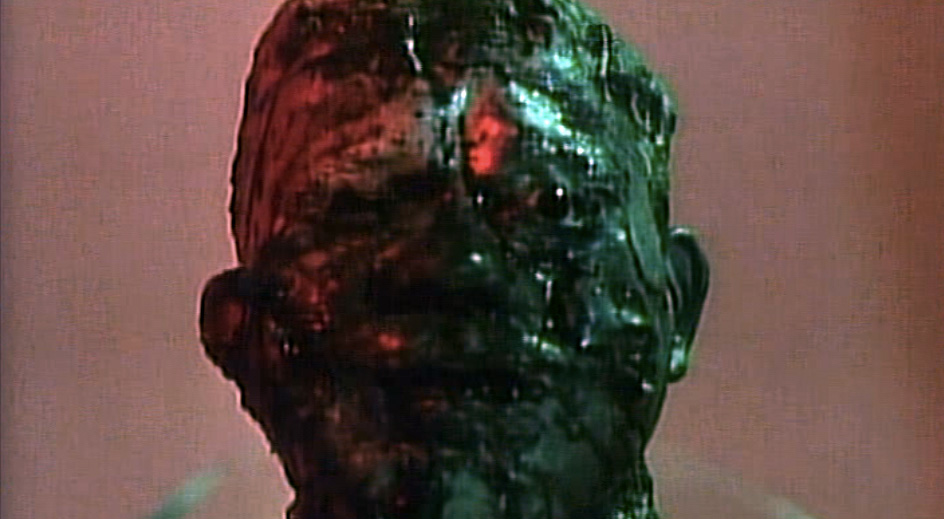
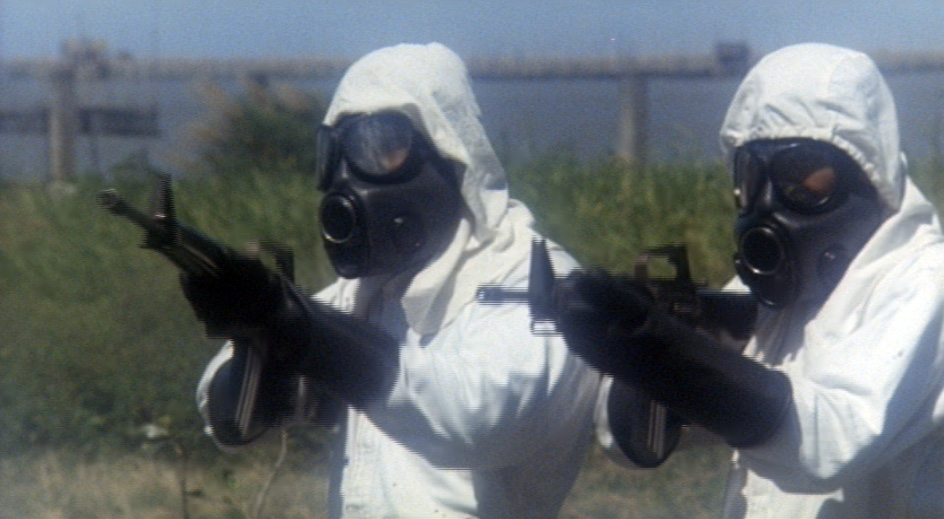
The film starts off on a tropical island, much like Zombie, although this is a different tropical island with more people. Some scientists are carting around a super deadly biological warfare canister. Does it get stolen by a terrorist? But of course! And naturally, the terrorist drops it and it cracks it open, because all biohazard material is transported in thin glass vials. You ever notice these canisters of biotoxins and plagues seem to pop open easier than your average bottle of aspirin? Someone should teach the military about the virtues of “To open, push down and twist.”
The terrorist flees to a high-profile luxury resort rather than trying to hide out or catch the first boat out of town. Before too long, he’s infecting people with the virus, which turns them into flesh-eating zombies, as bio-weapons are wont to do in these sorts of situations. The military moves in to contain the outbreak but bungles the job. They burn the infected bodies, which releases the toxin into the air because while the makers of Zombie 3 had seen Return of the Living Dead, I guess none of the characters had. The heat also makes the virus more powerful, much to the surprise of the scientists involved. Now, granted I haven’t had a chemistry class since 1989, and even back then I didn’t do so hot, but it seems to be that of all the tests you can run on a substance, seeing what heat does to it is one of the most basic things you’d do. Well, not these scientists. Pretty much everything surprises them, and like all horror movie scientists they spend the entire film yelling, “We need more time!”
Soon enough, you got zombies all over the place. A group of soldiers on leave team up with some ladies in an RV and get attacked by infected birds. I guess this is one of the only films where something other than people gets affected by zombie-ism, and hey! Maybe it explains what might happen to that shark in the first Zombie, although it still doesn’t answer the question of if zombie humans only eat other humans, do zombie sharks only eat other sharks? Anyway, the gang loads up their wounded, proclaim a need for immediate medical attention, and go to an abandoned hotel. Because when you think emergency medical attention, you think abandoned hotel. They take it one step further by leaving the wounded at the hotel and sending a healthy guy to get the doctor. Wouldn’t it make more sense to put the wounded in the plush RV and drive them to the doctor instead of going to the hospital and bringing the doctor back? This is how you know you’re in a proper Italian zombie movie.


Never mind. People are getting wounded all over the island, and all the wounds fester and bubble the way we like it, causing one of our heroes to utter, “That’s not pus. It’s something much worse.” While poking around the abandoned hotel, they find a crate of machine guns and flame throwers. Finding the weapons makes one of the guys utter the line, “Good! We’ll need those!” even though at this point they have absolutely no idea anything at all is going wrong other than some birds got ticked off at them. No one’s been threatened by zombies. They haven’t even seen a zombie or heard a broadcast about trouble elsewhere on the island. But they still strut around wielding their newfound toys, and well, so would I if I found a pile of flame throwers in an abandoned hotel.
Eventually, though, the zombies do come. The zombies and make-up effects are a let-down after Giannetti de Rossi set the bar incredibly high with his still-unmatched work in Zombie. Even Tom Savini’s creations for Day of the Dead pale in comparison to Zombie‘s shambling mounds of flesh. Zombie 3, on the other hand, tends to go more with the “slap some red paint and oatmeal on them” style of effects, which fall dramatically short of being satisfactory, even by B-grade film standards. Some of the zombies are the slow shuffling zombies we’ve come to expect. Some of them haul ass and use machetes. Some of them moan and creep about, and others are able to hold down jobs as popular morning drive time radio DJs. There’s really no consistency among the living dead.
This is one of the only films where you’ll see a zombie just haul off and kick someone’s ass. None of that mindless groping and grasping. No, this guy assumes a boxing stance and whips out the right hooks and some aikido submission holds. You’re a piss poor fighter if a zombie makes you tap out. Other zombies hide in closets and on top of pillars. It makes for a dramatic entrance, but you gotta wonder what the hell these zombies were thinking. Was that zombie perched on top of the pillar for hours and hours in hopes that someone might happen by so he could jump down on them? Did the zombie crawl in the kitchen cabinet of an old abandoned hut out in the jungle just giggling about that one day when someone might come and stand next to it? I won’t even talk about the zombie hiding under the pregnant woman in the hospital.
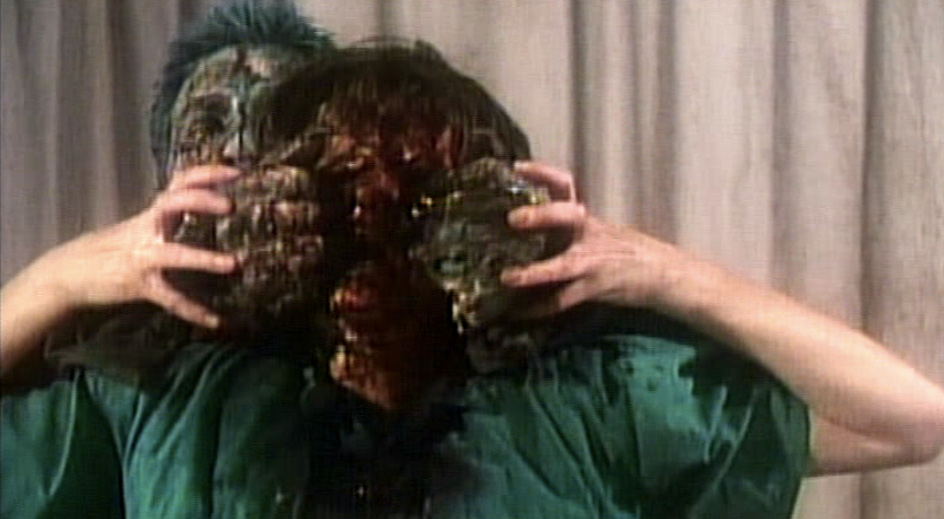

Oh sure I will. So they go to the hospital, and everyone has been evacuated except for one perfectly alive, uninfected pregnant woman. For some reason, they just left her behind. I guess no one wants to deliver a baby while running from zombies. They’ve all seen that sit-com episode! For some other reason, the zombies don’t eat the helpless woman. They just sort of hide around her and use her as bait, waiting for someone else to come in, even though that’s basically a one-to-one trade. But this way, the zombie can burst through her stomach for a big shock. Of course, it would be easier for the zombie to just get out from under the table or something, but what the hell? I like to imagine him and his zombie pals laughing and going, “This is going to be so cool!” as they all squat down in their hiding places and wait days on end for someone to chance along.
What else have we got? Why would you pull into an abandoned gas station, where rags are hanging from the sign and all the windows and doors are boarded up, then wander around inside, amid all the rubble and cobwebs, going “Is anybody here? Hello? We need help!” I mean, the place was boarded up! What about a boarded up building covered in trash and cobwebs makes you think someone might be in there hiding, refusing to acknowledge you until you recount to them your entire story up to that moment? When I see abandoned, boarded-up buildings, the first thing that pops into my mind isn’t “I bet a helpful person is in there waiting to lend a hand to someone with a story like mine!” No, my first thought is always “I wonder if there’s an old vintage Sinclair Oil sign in there.”
And then there’s the flying zombie head in the refrigerator. No scene in any movie has ever made me spit take, but I lost it during this scene. I mean, a zombie head was sitting in the refrigerator and comes shooting out like a rocket when someone opens the door—and then it goes flying all over the damn place. I thought things like that only happened in Hong Kong horror films! Ironically, a number of Fulci fans have pointed to the sheer lunacy of that scene as proof that Fulci himself had very little to do with the film. After all, why would the maestro of moody gore put in such a ludicrous gag? It turns out that in interviews, Fulci himself claims responsibility for the flying zombie head, and not only does he claim responsibility for it, he’s damn proud of it. And so he should be!


This is all a pleasant climax to a scene in which a couple people leave the group to go look for food. Because you know, when you are in an abandoned hotel in the middle of the jungle, you never know when they might have some Vienna Sausages they forgot to take with them. So they get attacked by the zombie head, which reminded me of an episode of the Three Stooges where a skull falls on an owl and the owl goes flying all around, so there’s this skull with little wings sticking out the ear holes fluttering all about and messing with Shemp. It really did crack me up back in the day. You can run the Shemp era down all you want. I liked it. Anyway, hours after they leave, no one ever bothers to question what might have become of the people who stepped into the next room, nor what all that shrieking and shooting might have been about.
Meanwhile, this one dude is still driving to the hospital. He leaves in broad daylight, and by dawn, the idiot is still driving to the hospital. Maybe he doesn’t know where he’s going and is just hoping to luck upon a hospital. Amid all this, some other soldiers, the ones hired by Fragasso and Mattei to flesh out this movie, are marching around in biohazard suits, shooting anything and everything that moves. If nothing else, there is plenty of shooting. To the credit (maybe?) of Matteia nd Fragasso, their portion of Zombie 3 is pretty action-packed, something that actually makes it feel a bit at times closer to the spirit of Dawn of the Dead, which was itself pretty action packed. Whether that’s what you want is another matter. They have no time for scenes of people thinking about stuff or contemplating the end of the world. Nope, they’re just out there shooting at the living dead and getting eaten. Only in the final scene do the two movies—Fulci’s occasionally goofy but brooding and mist-filled horror film and Mattei’s guns a’blazin’ action film—actually meet.
When Lucio Fulci saw what happened to the film, he screamed, tried to make them take his name off it, and then died a few years later. I don’t know if that last one is actually related to this film, but I’m sure Zombie 3 didn’t help. It didn’t turn out to be the landmark film Fulci’s original Zombie had been, but over the years it has gained a cult of avid admirers, myself obviously among them.


Claudio Fragasso went on to perform Inception-esque cashing in on cash-ins. Zombie had been marketed as a sequel to Dawn of the Dead, even though it wasn’t. Zombie 3 was marketed as a sequel to Zombie (which was released in Italy as Zombi 2, Dawn of the Dead having been released there as Zombi). Which, of course, it wasn’t. In 1989, Fragasso wrote and directed Oltre la morte (After Death) which was marketed as Zombie 4, a sequel to Zombie 3, which as you may guess, it wasn’t (it actually connects thematically more closely to Zombie). Don’t even get me started on Zombie 5: Killing Birds. He made an exorcism film, Beyond Darkness (which was also marketed as part of a series it has nothing to do with and in which no movie in the series was part of the series, because that’s Italian exploitation joints for ya), in 1989, and then in 1990 made the movie that would enshrine him, spawn legions of (often sarcastic) fans, and festivals: Troll 2—which, in classic Claudio Fragasso fashion, had nothing to do with Troll.
Post Zombie 3, Mattei (who was always complimentary of Fulci) carried on carrying on, including Shocking Dark (aka Terminator II, which had nothing to do wi…oh, you know the drill), a wild Aliens rip-off that turns into a Terminator rip-off; and Robowar, a movie that posited the question, “What if the Terminator was in Platoon?” Like Fragasso, he worked throughout the 1990s and into the 2000s despite the dramatic decline of the industry in which he had worked for so many years. In his final days, he shifted to digital video and returned to the Philippines, where he returned to the genre that made him a household name (provided that household contained fans of Hell of the Living Dead). Island of the Living Dead and Zombies: The Beginning (which heavily copies James Cameron’s Aliens) are a fitting capstone to a strange, strange career, showing that in the end, Mattei never got any better than he had been on Hell of the Living Dead, and that was plenty good enough.
Zombie 3 was one of the last theatrically released feature films Fulci would make, a reflection not so much of his continuously declining health (for a dying man, he worked a lot) as it was a reflection of the overall state of the Italian exploitation film industry as theatrical productions became less tenable and the industry shifted it’s focus to home video and overseas markets. After the horrendous experience of Zombie 3, Fulci took on easier jobs, directing a string of direct-to-video and made-for-TV movies. He struggled financially, moving into a small apartment before his unfortunate death in 1996. Dario Argento paid for the funeral arrangements. In 1998, a restored print of The Beyond toured the United States (and was the first film I saw in my new home of New York, when it played the midnight slot at the Angelika Film Center), sparking renewed interest in and a reevaluation of Fulci’s body of work, most of which had been dismissed as trash in its time. Today, we live in a world in which Zombie 3 has been remastered and released as a deluxe collector’s edition Blu-Ray.
What a time to be alive.
 Teleport City